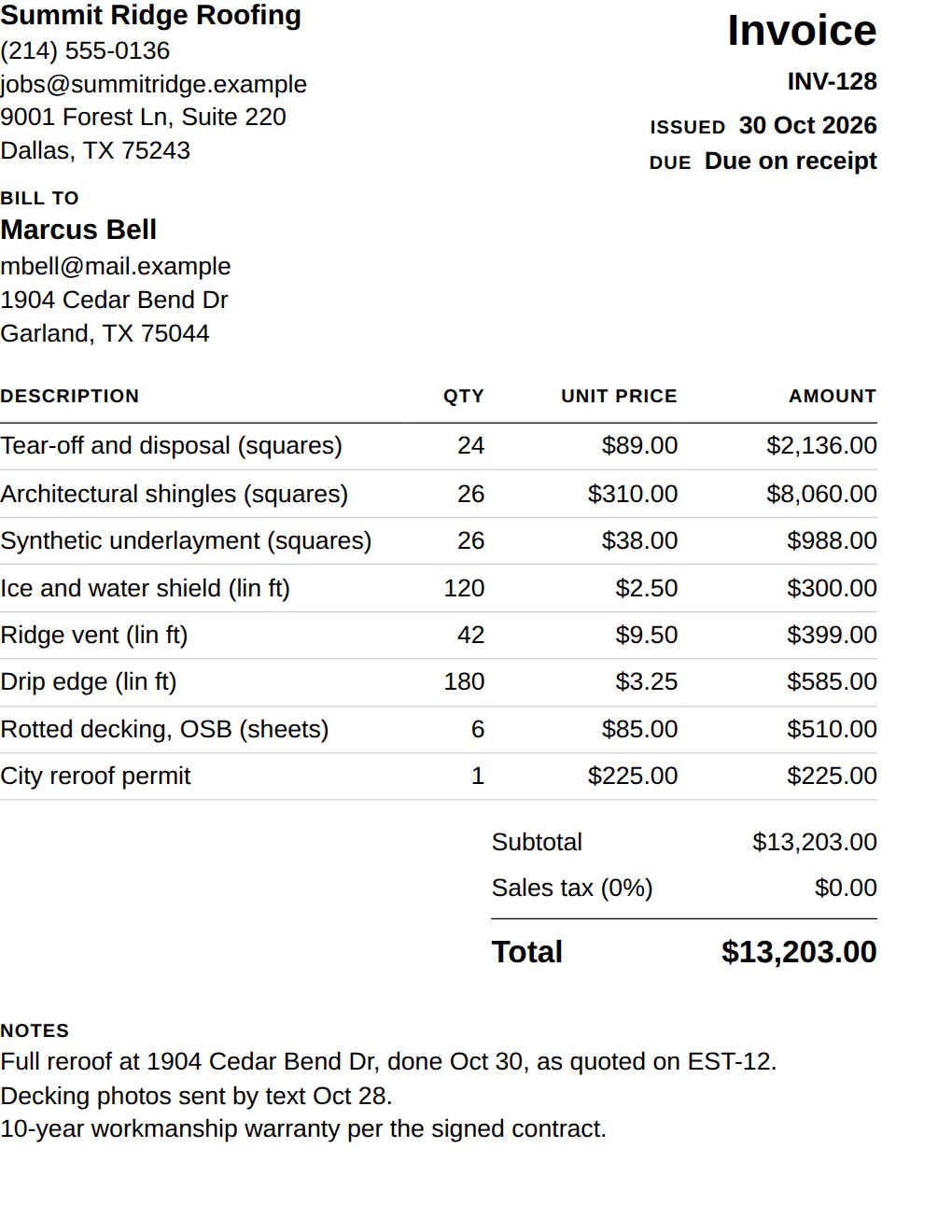
How to make a roofing invoice
- The property address and the job (full reroof, repair, gutters).
- Tear-off and disposal by the square, on the roof’s measured squares.
- Shingles by the square, including waste for cuts, hips and ridges.
- Underlayment by the square, and ice and water shield by the linear foot where it goes.
- Trim, flashing and vents by the linear foot: drip edge, ridge vent, step flashing.
- Decking replaced, by the sheet, with photos.
- Permit and any dumpster fee if not already in the tear-off price.
- Warranty terms and the estimate it came from, in the notes.
What is a roofing square?
A square is the amount of material that covers 100 square feet of roof once installed. A 2,400 square foot roof is 24 squares. Shingles are ordered and priced by the square, with extra for waste, which is why the sample bills tear-off on 24 squares and shingles on 26.
Decking and other surprises
Rotten decking is usually found only after tear-off. Agree a price per sheet in the estimate, photograph what you replace, and bill the actual count. A line like “Rotted decking, OSB (sheets) 6 at $85” with photos sent the same day rarely gets disputed.
Insurance jobs
When an insurer is paying, the adjuster compares your invoice with their own estimate line by line. Use the same units they use (squares, linear feet, each), keep your line names close to theirs, and keep photos of every item. Put the claim number in the notes.
Payment terms on a roof
Roofing invoices are often due on completion. In Invoice Maker, choose Due on receipt and the PDF prints “Due on receipt” instead of a date, as in the sample. For larger jobs, agree any deposit or progress payments in the contract and bill each one as its own invoice.